1. No Major Rivers Flow Into It
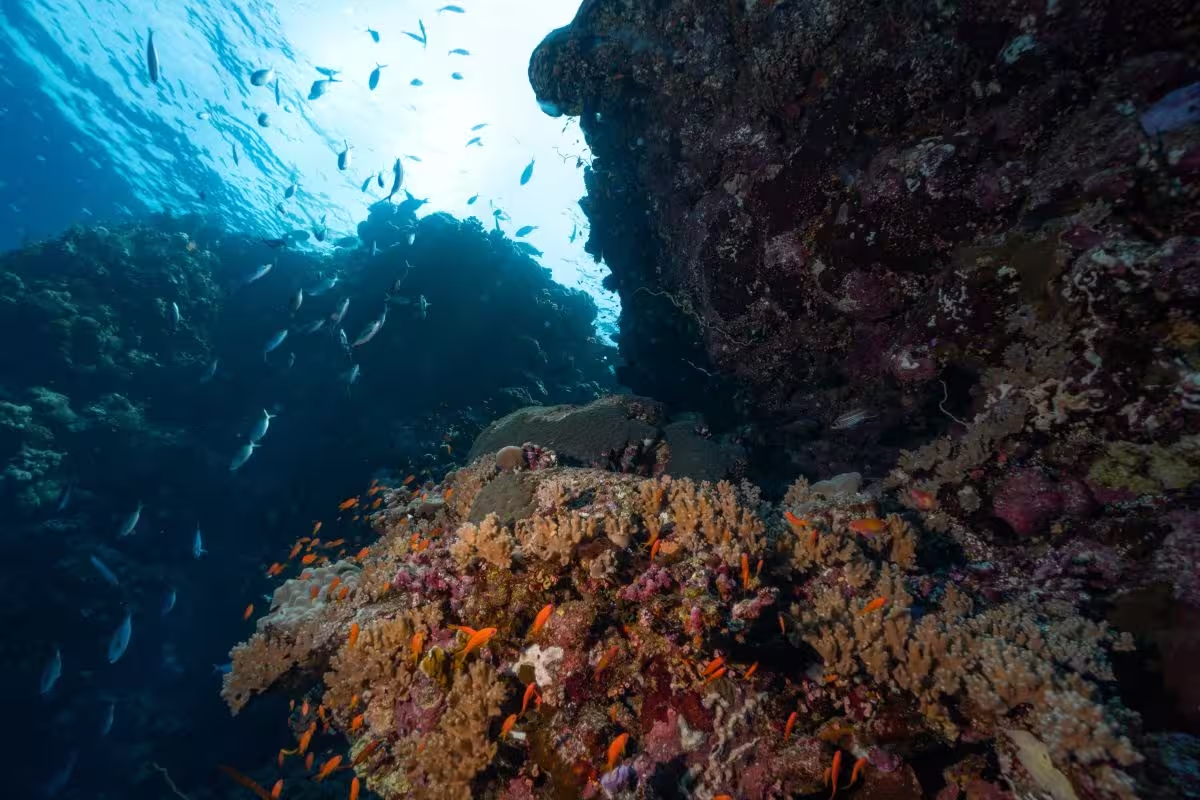
Most seas receive a steady stream of fresh water from rivers. That inflow stirs up sediment and lowers salinity. The Red Sea has essentially none of that. No significant river has ever emptied into it, so the water stays remarkably clear and unusually salty. That's one of the biggest reasons visibility here regularly reaches 20 to 30 meters or more.
2. It's Saltier Than Almost Any Other Sea
Limited rainfall, intense evaporation in the surrounding desert climate, and that lack of river inflow combine to make the Red Sea one of the saltiest seas on the planet. Divers often notice extra buoyancy here compared to less salty water elsewhere.
3. Its Coral Reefs Are Thousands of Years Old
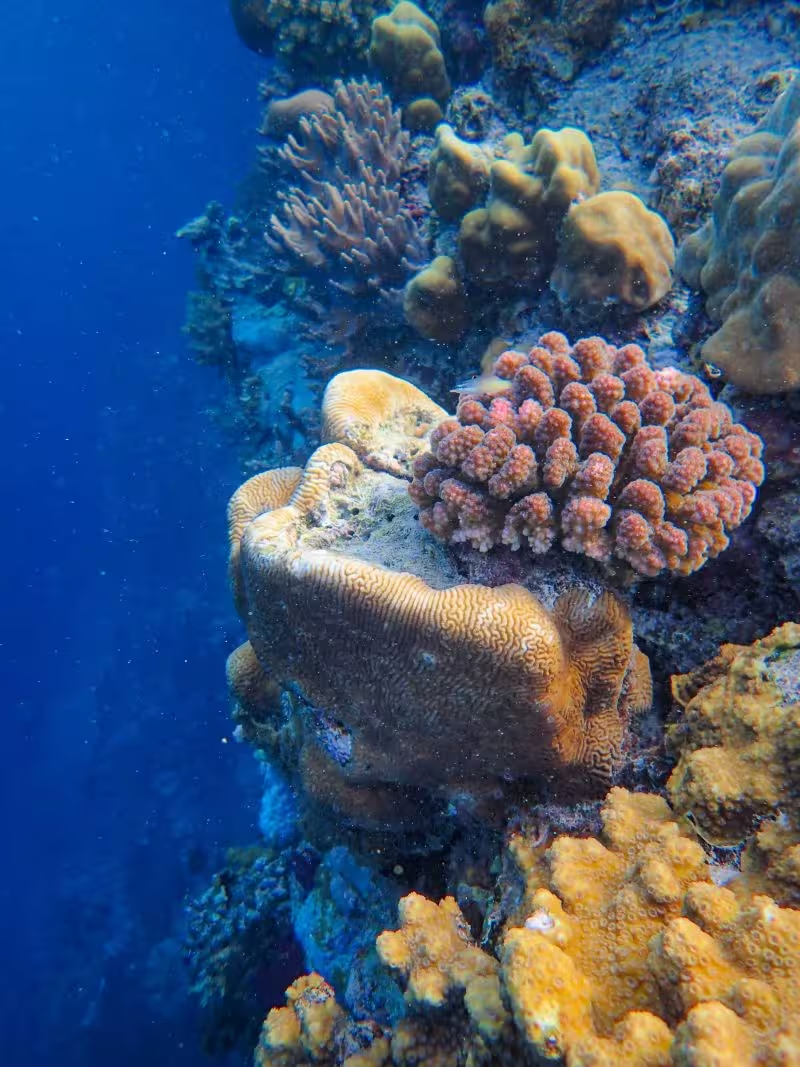
The fringing reef system lines the Red Sea's coast, including the reefs off Aqaba. Much of it began forming somewhere between 5,000 and 7,000 years ago. The coral you swim past today started growing before builders raised the pyramids of Giza.

4. A Huge Share of Its Marine Life Exists Nowhere Else on Earth
The Red Sea has stayed geographically isolated for millions of years. That isolation let many of its species evolve completely separately from the rest of the world's oceans. Roughly one in ten fish species here counts as endemic — you'll find them in the Red Sea and nowhere else. Some groups, like butterflyfish, show even higher rates of endemism.
5. It's Home to More Than 40 Shark Species
The Red Sea supports a surprisingly diverse shark population: around 44 recorded species, ranging from reef sharks to the occasional hammerhead passing through deeper channels. You'll find several of these species almost exclusively in this region.
6. Nobody Fully Agrees on Why It's Called "Red"
Despite the name, the Red Sea's water is famous for being brilliantly clear and blue, not red. The most common theory points to seasonal blooms of a reddish algae called Trichodesmium erythraeum, which can occasionally tint the surface. Other theories link the name to ancient references to the "red" mountains bordering the sea, or to old naming conventions where "red" simply meant "south." Either way, it remains one of the most debated names in geography.
7. It's Still Growing, a Few Centimeters at a Time
The Red Sea sits along a tectonic rift where the African and Arabian plates slowly pull apart — the same geological process that shapes the Gulf of Aqaba. Every year, the plates drift a little further, and the sea widens by a small amount. It's quite literally a sea still being born.
8. Its Corals Are Unusually Heat-Resistant
Ocean temperatures keep rising around the world, and many reef systems now struggle with coral bleaching. Red Sea corals tell a different story. Corals in the northern reaches near Aqaba tolerate warmer water remarkably well compared to corals elsewhere. Climate resilience researchers now study this trait closely, and some have nicknamed these colonies "super corals."
9. It's the Northernmost Tropical Sea in the World
The Red Sea stretches up into a latitude most people associate with cooler water. Even so, its water temperature stays warm enough year-round to support true tropical coral reef ecosystems. That's one of the reasons Aqaba offers excellent diving conditions for most of the year.

10. It Holds a World Scuba Diving Depth Record
The Red Sea isn't just beautiful — it's historic too. In 2014, Egyptian diver Ahmed Gabr set the world record for the deepest scuba dive ever completed. He descended past 332 meters, right here in the Red Sea. It remains one of the most extreme feats in diving history.
Bonus: AFun Facts About the Red Sea About Scuba Diving Itself
Since we're on the subject, here are a few more fun facts about scuba diving that surprise even experienced divers:
- "Scuba" is actually an acronym — Self-Contained Underwater Breathing Apparatus. It only became an everyday word decades after engineers invented the gear itself.
- Modern scuba gear traces back to the 1940s. Engineer Émile Gagnan and ocean explorer Jacques Cousteau built the first reliable demand-regulator system. It let divers breathe compressed air safely, without a surface air hose tethering them to a boat.
- You can never hold your breath while ascending. It's one of the first rules every new diver learns. Expanding air in your lungs can injure you seriously as you rise. That's why every certification course teaches controlled, continuous breathing as a core safety principle.
- Diving is one of the only sports where you're genuinely weightless. With the right buoyancy control, divers can hover perfectly still in open water — a feeling you can barely replicate anywhere on land.